Before you list a home or close on one, check that the garage door opens and closes smoothly, that the opener reverses on a 2x4 and when the photo eyes are blocked, and that nothing is frayed, loose or out of balance. Advanced Overhead Garage Door Company repairs and replaces garage doors and openers in Reno and across Northern Nevada, with a free estimate for any repair that turns up.
Key points
- A garage door is the largest moving part of a house, so it gets a real look at inspection
- Run the 2x4 and photo-eye tests before listing; the CPSC says to check every 30 days
- An older opener without photo eyes may be flagged by an inspector
- Spring systems are a job for trained professionals only (DASMA)
- A short list of repairs before a sale can avoid a surprise in the report
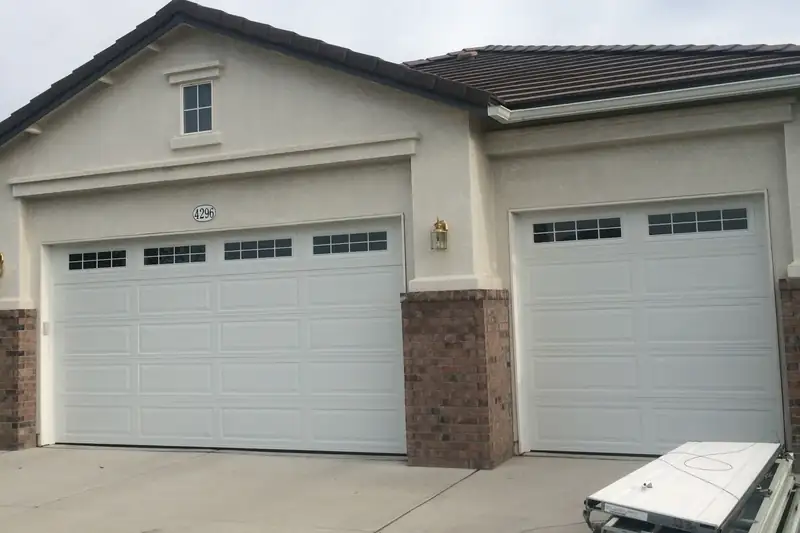
What do inspectors usually look at on a garage door?
A home inspector usually operates the door and opener, watches how the door travels, and looks at the visible parts. They typically note whether the door moves smoothly and stays balanced, whether the opener reverses when it meets an obstruction, whether photo eyes are present and aligned, and the condition of springs, cables, rollers, hinges and the bottom seal. They look at the parts; they do not adjust them.
Findings in the report are usually flagged for a qualified garage door technician to evaluate, which is where we come in. A buyer who sees a note about a worn cable or a door that failed the reversal test will often ask the seller to fix it. Knowing before the inspection saves a negotiation.
- Door travel: smooth, quiet and level, with no jerking
- Balance: the door stays put when stopped halfway
- Springs and cables: no gaps, fraying or rust
- Rollers, hinges and tracks: nothing cracked, bent or loose
- Opener: reverses on contact and the photo eyes work
- Wall control, keypad and remotes all work
What should I test before listing the house?
Run two checks. The first is the one the U.S. Consumer Product Safety Commission describes: place a 2x4 on the floor of the garage in the door's path and close the door with the opener; it should touch the board and reverse. For the second, LiftMaster's safety check: with the door open, block a photo eye (the CPSC says they should sit 4 to 6 inches above the floor) with an object over 6 inches tall and press the close button. The door should not close.
The CPSC says to inspect the garage door and the opener every 30 days, so this is a routine check, not a special one. Our monthly safety reversal test guide walks through it step by step. Leave springs, cables and brackets alone: DASMA says spring systems are dangerous and should be repaired only by trained professionals.
Why do old openers and missing photo eyes come up?
An older opener may lack photo eyes or a dependable reverse, and an inspector may flag it for exactly that reason. Our repair or replace guide explains the date that matters and when an old opener is better replaced than repaired.
As a seller, you can look at the label on the motor unit for its date. As a buyer, you can ask. If the opener is older, replacing it before closing is a common way to settle the point. We are an authorized LiftMaster dealer and install new openers, remotes, keypads and wall controls; see garage door opener repair and LiftMaster openers. The age of the housing stock in your town is on our housing age data page.
Which repairs matter before a sale?
Fix what affects how the door works or whether it is safe, and what a buyer sees right away. In rough order of importance:
- A broken spring or frayed cable, because the door will not work properly and is not safe to use
- An opener that fails the reversal tests, or a missing sensor
- A door that is off track, noisy, or out of balance
- Remotes and keypads that do not work, so the buyer gets a working set
- A torn bottom seal, worn rollers or a damaged section
Many of these are quick visits; we can usually have repairs done in a few hours, depending on where you are. A tune-up is a sensible all-in-one step before listing, since it covers lubrication, balance, hardware and safety checks. If the door is beyond economical repair, our repair or replace guide helps you decide.
How can we help whichever side you are on?
Call 775-356-0444 for a free estimate. A qualified, friendly technician checks the door and opener, tells you what needs doing and what does not, and gives you a free estimate. We guarantee all our work, and emergency and same-day service is available 24/7 when a closing date is close.
Sources (3)
- U.S. Consumer Product Safety Commission: cpsc.gov/s3fs-public/garage.pdf (checked November 2026)
- DASMA (Door & Access Systems Manufacturers Association): dasma.com/safety-tips/ (checked November 2026)
- LiftMaster: liftmaster.com/about-liftmaster/safety (checked November 2026)